

How Should You Plan Ceiling Fans?
By David K
8 min read
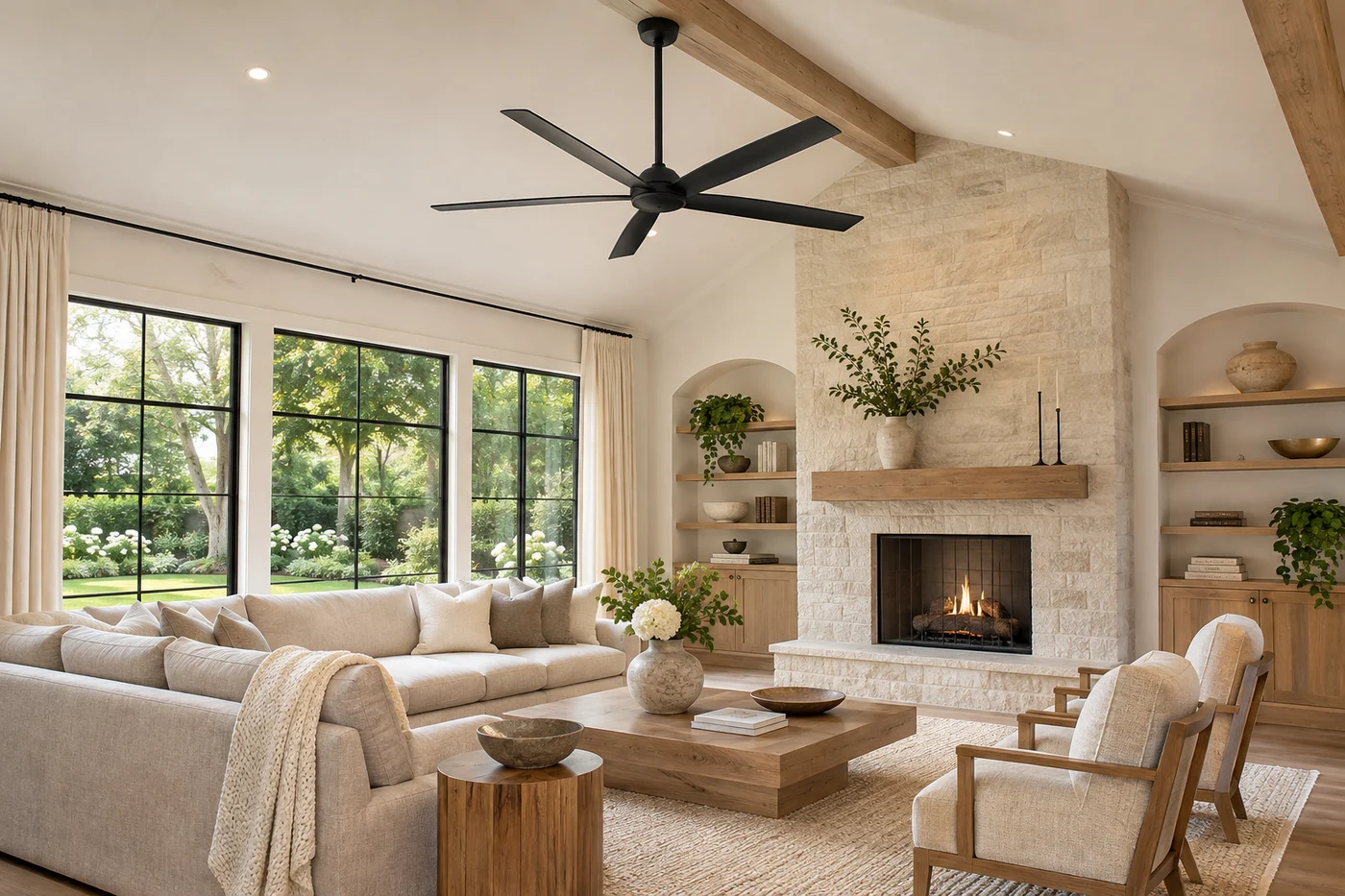
Plan ceiling fans while room layouts, ceiling shapes, structure, lighting, HVAC outlets, and wiring can still move. First decide which occupied zones would benefit from air movement. Then place a specific fan or a documented performance range on the reflected ceiling plan, using the real furniture layout and the selected manufacturer's mounting, blade-clearance, slope, and support requirements. Coordinate a fan-rated mounting location, power, controls, light output if needed, and service access before rough-in. For a covered terrace or porch, select a product listed for that exposure rather than assuming an indoor fan is protected enough. Finally, test every speed, direction, control, light, sound, and visible wobble before handover.
Planning a new home? Explore Max Built's custom-home process, then view the craftsmanship in our project portfolio.
Choose rooms by use, not by habit
Start with how each room will actually be occupied. A great-room seating group, primary bedroom, exercise area, or covered terrace may benefit from perceptible air movement. A narrow hall, small bath, low-ceilinged room, or space already crowded with decorative lighting may not. A custom home does not need a fan in every room simply because a fixture box fits on the ceiling plan.
Treat a ceiling fan as a comfort tool, not a replacement for the home's heating, cooling, ventilation, or humidity strategy. The U.S. Department of Energy explains that fans cool people through air movement rather than cooling an empty room. That distinction should guide controls and homeowner habits: operate a fan where people are present, and turn it off when the room is vacant unless the selected system has another documented purpose.
Define the goal for each proposed location. Is the fan expected to make a seating area feel more comfortable, mix air gently in a tall room, support a sleeping preference, or improve a covered outdoor sitting zone? The answer affects placement, airflow, speed range, sound expectations, controls, and whether a light kit belongs on the fixture.
- Name the occupied zone the fan is intended to serve
- Decide whether quiet low-speed operation or stronger airflow matters more
- Record whether the fan also needs to provide general or task lighting
- Separate air-movement goals from HVAC and ventilation requirements
Draw the fan with the ceiling and furniture
Place the fan on the same coordinated plan as the furniture, doors, windows, fireplace, television, cabinetry, drapery, beams, slopes, coffers, skylights, lights, speakers, sprinklers when applicable, supply registers, returns, and access panels. A fan centered in a ceiling rectangle may be off-center from the seating or bed it is meant to serve. It can also create a visual conflict with a beam or send moving shadows across nearby lights.
Use the actual fan geometry, not a small generic symbol. Show the full blade sweep, canopy, downrod or close-mount assembly, motor housing, and light kit if selected. Review the selected manufacturer's required blade height, distances from walls and other obstructions, sloped-ceiling limits, downrod options, and mounting instructions. Those product-specific requirements should control the final layout rather than an assumed universal clearance.
Study the room in section as well as plan. A vaulted great room may need a longer downrod to place the blades at a useful height, while a low ceiling may make a different fixture or no fan the better answer. Confirm that the completed position remains visually composed from important entries and windows without putting blades near doors, tall cabinets, upper bunks, exercise equipment, or other changing room elements.
Compare airflow, efficiency, sound, and control
Blade span alone does not describe how a fan will feel in the room. Compare current manufacturer data for airflow at available speeds, energy use or airflow efficiency, motor and control type, speed range, direction control, sound expectations, light output, warranty, and the mounting options approved for the model. ENERGY STAR's current product finder makes the variation visible by publishing fields such as blade span, airflow efficiency, light output, and indoor or outdoor designation for certified products.
Match the fan to the occupied area and ceiling condition instead of choosing the largest diameter that fits. A broad open room may need a different airflow pattern from a bed or reading chair. Two coordinated fans may sometimes serve a long room more evenly than one oversized fixture, but they also add visual weight, wiring, controls, and another pair of moving elements. Have the architect, interior designer, builder, and qualified electrical professional review the choice against the real room.
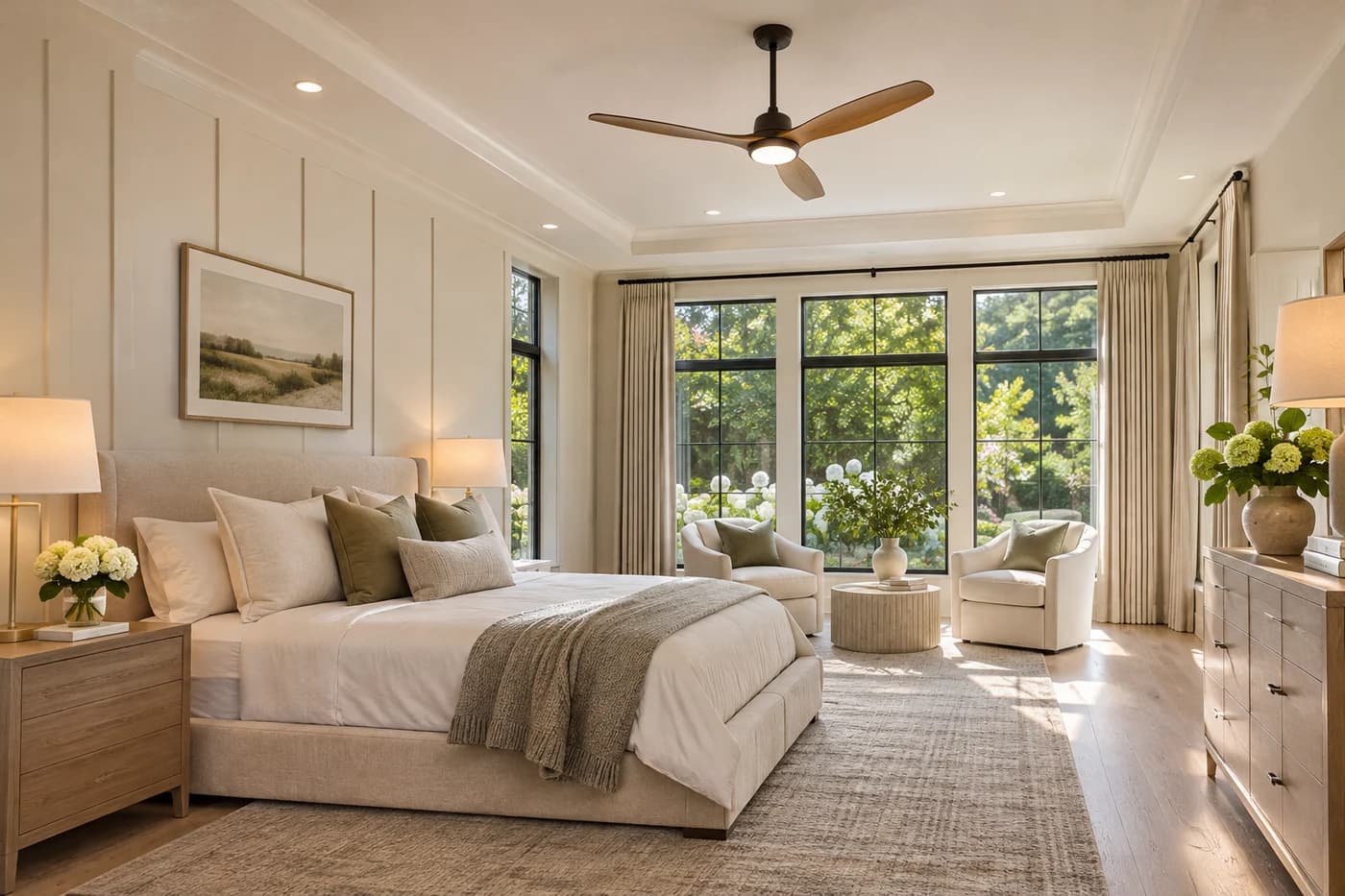
Set a sound expectation before selection. A bedroom fan may need exceptionally quiet low-speed operation, while an outdoor fan may be judged more by airflow and weather durability. Ask how the fan is balanced, controlled, serviced, and reversed, and whether the chosen wall control, remote, app, or automation interface preserves every required function without creating unnecessary complexity.
Coordinate support, power, controls, and nearby systems
A ceiling fan is a moving load, not an ordinary lightweight pendant. Identify a mounting assembly approved for fan support and coordinate its position with joists, trusses, beams, ceiling framing, insulation, air sealing, and finish details. The selected product instructions and qualified project professionals should determine the support and installation method. Do not let a late field decision move the fan away from the tested room layout merely because another location is easier to wire.
Show the power and control strategy on the electrical drawings. Decide whether the fan and light need separate wall controls, how speed and direction are changed, where a remote is stored, what happens after a power interruption, and whether an automation system adds useful everyday behavior. A wall switch that only cuts power may not provide the experience the homeowner expects from a multi-speed fan with an integrated light.
Resolve ceiling conflicts before rough-in. Keep blades and mounting hardware clear of decorative fixtures, recessed lights, air outlets, smoke alarms, speakers, shades, ceiling access, and other equipment according to the applicable design and manufacturer guidance. Check the lighting at night with the fan running; fixtures placed too close to moving blades can create distracting flicker or shadow even when the electrical layout technically fits.
Use an outdoor-rated fan for a covered outdoor room
A solid roof over a terrace does not automatically make an indoor fan suitable for that location. Wind-driven rain, humidity, condensation, temperature changes, and insects can reach equipment beneath a covered roof. UL Solutions advises choosing outdoor appliances, including ceiling fans, that are rated for outdoor use. Confirm the exact exposure rating and installation conditions for the selected model rather than relying on appearance or a general product-family name.
Coordinate the fan with the outdoor architecture. Show the roof structure, ceiling finish, beams, heaters if used, recessed lights, speakers, retractable screens, fireplace or cooking exhaust, door swings, and the furniture layout. Keep the fan beneath a solid compatible mounting surface with the clearances required by its instructions. Do not suspend a fan through operable pergola louvers or place it where a screen, heater, or moving door can enter the blade zone.
Plan how the fixture will be cleaned and serviced. Outdoor blades and housings collect pollen, dust, and moisture, and a tall terrace ceiling can turn ordinary maintenance into a difficult access problem. Select a finish and material intended for the exposure, preserve a safe service approach, and keep controls understandable from the main outdoor entry.

Test the complete installation before handover
Test each fan at every speed and in each supported direction. Operate the light through its full control range, verify wall controls and remotes, listen from the bed or seating position, and watch for persistent wobble, vibration, rubbing, flicker, control dropouts, or movement at the canopy. A new fan may move slightly while operating, but unusual motion or sound should be evaluated under the manufacturer's instructions by the responsible installer rather than accepted as normal.
Check the surrounding room while the fan runs. Confirm that curtains, tall doors, cabinet fronts, decorative pendants, and movable furnishings remain outside the blade zone. Review airflow from the occupied position instead of only standing beneath the motor. If the result is uncomfortable or ineffective, diagnose the model, direction, speed, mounting height, and room layout rather than assuming a larger fan is automatically the answer.
Include the model number, instructions, warranty, control pairing, direction guidance, replacement-light information, and maintenance requirements in the homeowner record. Max Built can help Charlotte-area custom-home clients coordinate fans with the architecture, electrical plan, lighting, structure, and outdoor rooms before rough-in. Product selection, electrical design, mounting, and installation should be confirmed by the qualified professionals responsible for those scopes.
- Every intended speed and direction operates normally
- Fan and light controls are labeled and easy to understand
- No nearby fixture, door, drapery, or furnishing enters the blade zone
- Sound and airflow are reviewed from the actual occupied area
- Model, warranty, instructions, and service information are handed over
Sources and editorial notes
U.S. Department of Energy guidance on seasonal ceiling-fan operation and air movement
Prepared with AI assistance and editorially reviewed by Sage. Architectural images are illustrative, not documented Max Built projects. This organizational guide does not replace project-specific professional advice.
Ceiling-fan planning questions
When should ceiling fans be selected for a custom home?
Select the intended model or a tightly defined performance and mounting range before ceiling framing, electrical rough-in, lighting, HVAC outlets, and decorative ceiling details are final. Reconfirm the exact product and instructions before installation.
Should a ceiling fan be centered in the room?
Not automatically. Center it on the occupied zone it is meant to serve while coordinating the full blade sweep with furniture, walls, beams, slopes, lights, air outlets, doors, and other ceiling elements.
Does a larger ceiling fan always provide better comfort?
No. Compare the selected model's tested airflow, speed range, efficiency, sound, mounting height, and room fit. Blade diameter is one input, not a complete description of performance.
Can an indoor ceiling fan be used on a covered porch?
Do not assume it can. Choose a product rated for the actual outdoor exposure and follow its installation instructions. A roof reduces direct rain but does not eliminate humidity, condensation, or wind-driven moisture.
Can a ceiling fan replace air conditioning or ventilation?
No. A ceiling fan moves room air and can improve how occupants feel, but it does not provide outdoor air, remove indoor contaminants, manage humidity by itself, or replace the home's heating and cooling design.
What should be tested before a ceiling fan is accepted?
Run every speed, supported direction, light setting, wall control, remote, and integration. Check airflow and sound from the occupied area, inspect for unusual wobble or vibration, and confirm nearby doors, drapery, lights, and furnishings remain clear.
Build the right plan before construction begins
Tell us about your property, priorities, and the way you want to live. We'll help organize the next decisions around a clear, buildable path.