

Custom-Home Contract Checklist
By David K
8 min read
A custom-home contract should make the planned house and the working process equally clear. It should identify the parties and current contractor license, name the drawings and specifications that control the work, separate included scope from allowances, alternates, owner purchases, and exclusions, and explain the price structure and payment milestones. It should also define how selections, substitutions, schedule updates, delays, and written changes are handled; who is responsible for permits, site access, utilities, insurance evidence, and project records; and what substantial completion, final completion, punch work, closeout documents, warranties, and final payment require. Because the contract allocates legal and financial risk, have a qualified North Carolina construction attorney review the actual agreement rather than relying on a generic checklist as legal advice.
Planning a new home? Explore Max Built's custom-home process, then view the craftsmanship in our project portfolio.
Identify the parties, license, and complete contract document set
Begin with the exact legal names and contact information of the owner and contracting company. Record the contractor license number and verify the current record through the North Carolina Licensing Board for General Contractors. The Board states that a North Carolina general contractor must be licensed when the project is valued at $40,000 or more. A custom-home agreement should also identify the property and the person authorized to give owner decisions so informal conversations do not become competing instructions.
The written agreement is only one part of the contract package. List every incorporated drawing, specification, schedule, proposal, exhibit, allowance sheet, alternates list, and addendum by title, date, and revision. State the order of precedence or the process for resolving a conflict. Otherwise a rendering, estimate, floor plan, and specification can describe different versions of the same house without showing which one controls.
Confirm which documents are approved for pricing, permitting, and construction. A permit set is reviewed for code compliance, but it does not automatically contain every finish, product, quality level, or contract responsibility the owner expects. The contract should connect the legal agreement to a coordinated buildable scope rather than assuming that the permit drawings answer every project question.
- Are the owner, contractor, property, license, and authorized decision-makers identified correctly?
- Which dated drawings, specifications, schedules, and addenda are incorporated?
- How will conflicts among contract documents be resolved?
- Which items still require design, pricing, or owner approval before construction?
Define the scope, allowances, alternates, and exclusions
Describe the included work at enough detail to compare the contract with the house that will be built. The North Carolina Licensing Board's consumer guidance recommends a written contract with a detailed description of the work, materials, and equipment. For a custom home, that description may live across drawings and specifications, but the agreement should still show where the controlling information is found and who supplies and installs each major item.
Treat an allowance as an unfinished decision, not a complete specification. Name what the allowance covers, its amount or pricing basis, whether it includes tax, freight, delivery, installation, waste, accessories, and contractor markup, and how overages or credits are calculated. Pair each allowance with a selection deadline. A cabinet allowance without door style, finish, hardware, interior fittings, installation, and decision timing leaves more uncertainty than the dollar figure suggests.
List exclusions and owner-furnished items as carefully as included work. Site improvements, utility charges, design fees, appliances, decorative fixtures, landscaping, window treatments, technology, specialty equipment, furniture, and post-completion services should not sit in an assumed middle ground. If an alternate may be accepted later, show its scope, price treatment, expiration or decision point, and effect on design or schedule before it is authorized.
Connect payments, decisions, and changes to documented progress
The price section should say whether the agreement is fixed-price, cost-plus, another defined structure, or a combination for stated portions of the work. Explain which costs are included, which can change, how fees or markups are calculated, what documentation accompanies a payment request, and how allowances, alternates, credits, contingencies, taxes, escalation provisions, and owner purchases are handled. Do not compare proposals by the bottom line until their scope and pricing assumptions are aligned.
Use payment milestones that can be observed and documented. The Licensing Board advises homeowners to use a payment schedule that follows completed work and to keep contracts, changes, invoices, payment receipts, correspondence, and progress photos. A custom agreement should define the application process, review period, supporting information, retainage if used, disputed amounts, lender inspection or draw requirements when applicable, and the conditions for final payment.
Require written changes before changed work proceeds except for a clearly defined emergency process. A useful change document describes the reason, revised scope, price adjustment or pricing method, schedule effect, drawing or specification revisions, and required signatures. Selection upgrades, site discoveries, substitutions, owner requests, and design corrections should not all be hidden under one vague change-order label; the record should show what changed and why.
Assign permits, insurance, site responsibilities, and lien steps
State who obtains and pays for permits, plan reviews, utility approvals, inspections, and required professional services. Mecklenburg County Code Enforcement handles permitting, plan review, and inspections for building, electrical, mechanical, and plumbing work, but project participants still need a written responsibility map for applications, trade information, corrections, fees, inspection scheduling, and records. Code approval does not replace the contract's quality and scope requirements.
Identify responsibility for site access, temporary utilities, erosion controls, security, material storage, surveys and layout, tree protection, neighboring-property coordination, weather protection, cleanup, and disposal. Require current evidence for the insurance and workers' compensation coverage that the agreement calls for, and have the owner's insurance professional confirm the property and construction coverage needed for the specific project. Do not assume a certificate answers every coverage question.
New residential construction may also involve North Carolina lien-agent and lien-waiver procedures. LiensNC says the owner is responsible for appointing the lien agent when the requirement applies and advises that exemption questions are legal questions for a North Carolina attorney. The contract should identify who coordinates the filing information, notices, payment documentation, waivers, lender or closing requirements, and final record—without attempting to replace advice from the owner's attorney, lender, title professional, or insurer.
Define completion, closeout, warranty, and the final handoff
Define the terms used to finish the project. Substantial completion, certificate of occupancy, owner move-in, punch-list completion, and final completion are not automatically the same event. State who determines each milestone, what must be operational or corrected, how the punch list is created and closed, what limited early occupancy would require, and which conditions release retainage or final payment.
Create a closeout exhibit instead of asking for 'all documents' at the end. It may include permits and inspection records, approved changes, as-built or record information when included, surveys, equipment schedules, startup and test reports, manuals, warranties, finish and paint schedules, care instructions, spare materials, access credentials, keys, service contacts, and photographs of concealed work. Assign the format and delivery point so the owner receives an organized record rather than a box of unrelated papers.
Separate the builder's written warranty from manufacturer warranties and trade service obligations. Define coverage periods, start dates, exclusions, notice method, access for evaluation, response process, emergency contacts, and responsibility for owner maintenance. The actual agreement should also address suspension, termination, dispute resolution, and other legal risk provisions with qualified counsel. Max Built can help organize scope and preconstruction decisions, but the owner should rely on the signed documents and project-specific professional advice for the legal agreement.
Sources and editorial notes
North Carolina Licensing Board for General Contractors consumer contract guidance
North Carolina Licensing Board for General Contractors license search
Mecklenburg County Code Enforcement permitting, plan review, and inspection resources
LiensNC project roles and lien-agent information
LiensNC filing exemptions and legal-advice notice
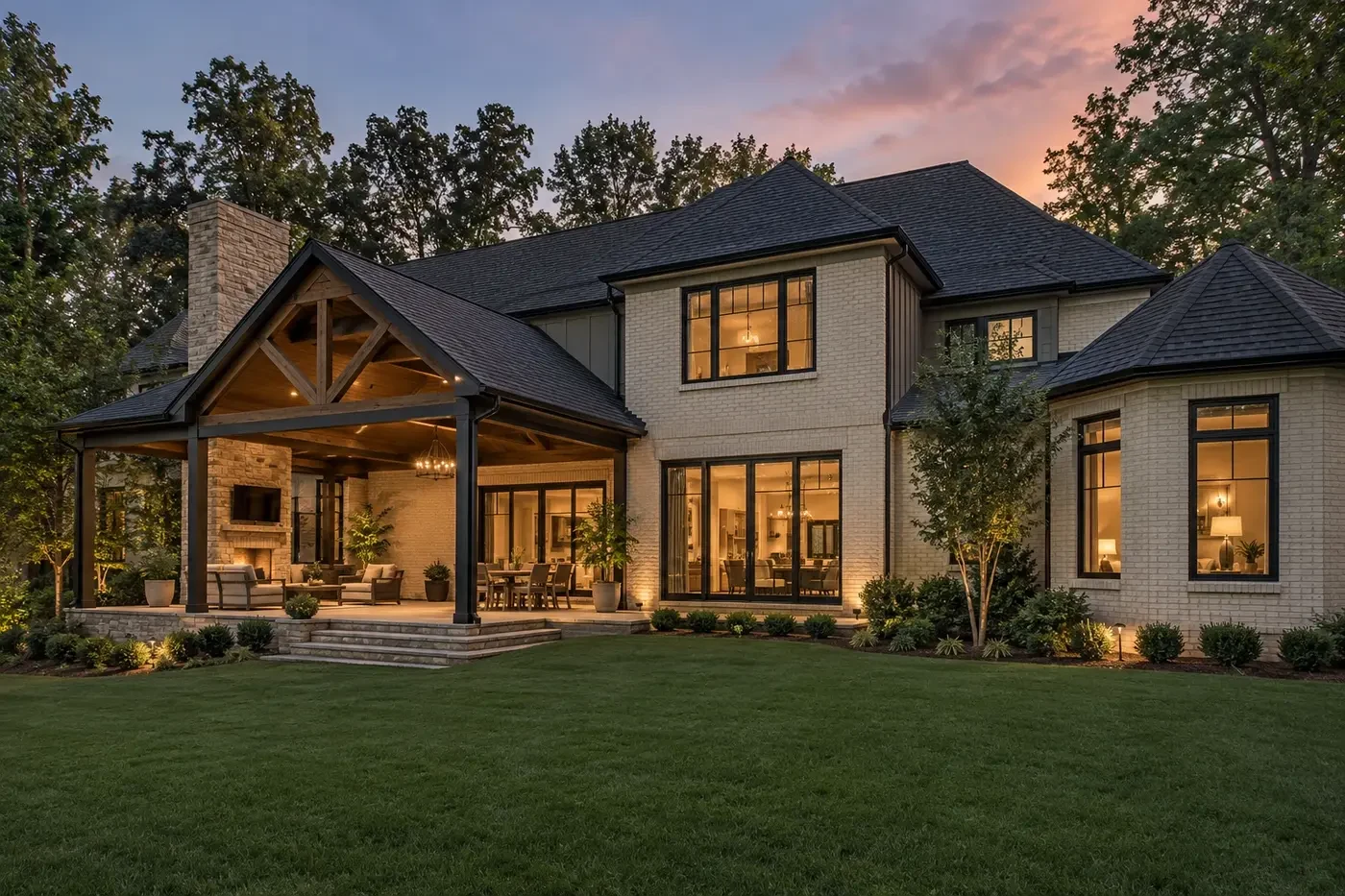
Prepared with AI assistance and editorially reviewed by Sage. Architectural images are illustrative, not documented Max Built projects. This organizational guide does not replace project-specific professional advice.
Custom-home contract questions
Should a custom-home owner have the contract reviewed by an attorney?
Yes. A checklist can help organize questions, but the agreement allocates legal and financial risk. A North Carolina construction attorney can review the actual price structure, documents, changes, payment terms, delays, liens, insurance, warranties, termination, and dispute provisions for the specific project.
Are the architectural drawings enough to define the construction scope?
Usually not by themselves. Drawings may not state every product, finish, allowance, contract responsibility, exclusion, owner-furnished item, or closeout requirement. The contract should identify the complete set of controlling drawings, specifications, schedules, exhibits, and addenda and explain how conflicts are handled.
What should a custom-home allowance explain?
It should identify the item or category, amount or pricing basis, included tax, freight, delivery, installation, accessories, waste, and markup, the selection deadline, and how overages or credits are calculated. It should also say who makes the selection and who confirms compatibility with the design.
Should every custom-home change be written down?
Yes. Except for a narrowly defined emergency procedure, changed work should be authorized in writing before it proceeds. The record should describe the revised scope, price adjustment or pricing method, schedule effect, related document revisions, and required approvals.
What should happen before final payment on a custom home?
Follow the signed agreement, but the final-payment conditions should be explicit. They may include final completion, agreed punch-list status, required inspections and occupancy documents, closeout records, warranties, keys and credentials, final account reconciliation, and applicable lien or lender documentation reviewed by the owner's qualified professionals.
Build the right plan before construction begins
Tell us about your property, priorities, and the way you want to live. We'll help organize the next decisions around a clear, buildable path.